NicaNotes
June 25, 2026
“If you can control a man’s thinking you do not have to worry about his actions. When you determine what a man shall think you do not have to concern yourself about what he will do.” Carter G. Woodson, “The Miseducation of the Negro”
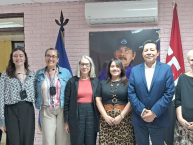
In the wake of the US kidnapping of the Venezuelan president Nicolas Maduro and its first lady Celia Flores, extrajudicial killing of fishermen off the country’s coast, and threats to do the same and more in Cuba, a delegation from the US recently visited Nicaragua as guests of Casa Ben Linder.
Our group primarily consisted of educators, activists, and artists and came from states as diverse as Montana and California with the majority coming from Maryland. Four of us were members of the Black Alliance for Peace.

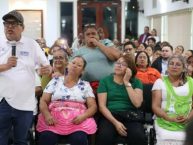
The Casa Ben Linder group met with teachers at the Centro Tecnológico in Bluefields.
Our purpose was to see for ourselves what have been the results for the Nicaraguan people of the socialist project led by the Sandinista government which originally came to power after the 1979 revolution ousting the brutal US-backed dictator, Anastasio Somoza.
Since socialist-leaning governments came to power in Cuba, Venezuela, and Nicaragua, the people of the US have been subjected to a diabolically effective propaganda campaign aimed at ensuring that no other countries follow their lead. An example of such was the response of a delegation member’s friend when he learned of our visit: “I would love to visit but wouldn’t want to be thrown in jail or killed for being a practicing Catholic.”
Combating such parroted false narratives is our task.
We learned the following and so much more:
The history of Nicaragua is one of anti-imperialist struggle dating back to the 1856 invasion by U.S. mercenary William Walker, who re-imposed slavery and declared himself president. US Marines invaded in 1912 and occupied the country until 1933. The resistance of Augusto Sandino in the 1920s and 30s inspired the founding of the Sandinista National Liberation Front (FSLN) years later in 1961. This struggle would eventually lead to the 1979 overthrow the Somoza dictatorship.
President Daniel Ortega, addressing the nation from the plaza at the celebration of the 46th anniversary of the Sandinista Revolution on July 19th of 2025, reminded the crowd, “It is the principle that our General Sandino left us in our hearts… when he told the Yankees, ‘I am not for sale and I do not surrender!” Sandino’s legacy, Ortega emphasized, lives on in the youth, in the workers, and in the peasants who continue to build socialism in Nicaragua.
Nicaragua has only had the 46 years since the 1979 revolution to develop its infrastructure in the service of its own people. The country has set forth on a very different path of development than the one promoted by the U.S. during that same period. The first 10 years were partially interrupted by the U.S. sponsored Contra War, which slowed but did not stop Nicaragua’s progress. In the next 16 years, starting in 1990, Nicaragua was dominated by right-wing neoliberal governments that were ideologically committed to supporting U.S. domination in Latin America and opposed to providing quality public services. That government attempted to rescind the autonomy granted in the constitution to the Caribbean region which includes Bluefields and is home to a majority of Indigenous and Afro-descendent peoples including the Garifuna people who have a rich and greatly under told history of resistance.
After studying about the history that shaped the current Nicaragua, like Cuba, Venezuela, and Colombia, it is clear that some of the country’s revolutionary inclination can be traced to the Haitian Revolution of 1804.
It is easy to see that not only has the US narrative about the country been patently false, US foreign policy is both duplicitous and imperial by design, meant to create spaces for capitalist interests, political control, and hegemonic values. The Nicaragua we are seeing is a work in progress, and progress is good, with the literacy rates of adults being over 80% and youth over 90%. More than 99% of Nicaraguans have access to electricity and 95% have access to running water. Higher education is free, and healthcare is free. Not only is what we see here progress, it is also an example, a blueprint for other countries to emulate.
The majority of our group’s time was spent on the Caribbean Coast, specifically the Bluefields region. This region was economically and culturally cut off from the Pacific Coast throughout its history until 1979. The region has six major ethnic groups, including Indigenous and Afro-descended groups. These groups lacked legal recognition by the state until 1987 when Nicaragua adopted a new constitution that defined the nation as multi-ethnic. This process was instigated by the Sandinista movement. So strong was the Sandinista movement at the grassroots level that when a neoliberal government won the presidency in 1990 and tried to undo the autonomy granted to this region, it was not able to muster enough votes to overturn the constitutional protection.
In the past 19 years, since 2007, when the Sandinista Front came back into power, the country is seeing slow but steady progress toward infrastructure systems that serve the Nicaraguan people.
We have observed each level of education at work to ensure that Indigenous culture is revered and included (from language to traditional medicine) in the curriculum. This is evident from the fact that students can give assigned presentations in their Indigenous language rather than the imperial language of Spanish if they so choose. Another indication of the country’s commitment to defend its revolution is the required reading of Kwame Nkrumah’s “Neocolonialism: the last stage of imperialism.”
In line with the country’s Indigenous heritage, Nicaragua understands and surveys the ecosystem and the people’s relationship to the environment. In floodplain areas, the government provides adapted housing rather than displacing residents. In other words, communities have not been gentrified as are similar neighborhoods in the US. Housing is designed to withstand rising water levels. Nicaragua also has diversified its energy and power grid over the past 20 years with renewables such as geothermal, solar, bio fuels, and wind. Renewables now supply up to 80% of Nicaragua’s electricity.
In spite of the tremendous success and its bottom-up governmental structure, like Venezuela and Cuba, Nicaragua has been hit hard by US illegal unilateral coercive measures (including an embargo against Cuba and sanctions against all three countries). The Sandinistas have skillfully managed to avoid the International Monetary Fund (IMF) debt traps more commonly referred to as “Structural Adjustment Programs” which they discarded when they returned to power in 2007 and have stayed afloat with a people-first economic strategy.
The US State Department unleashed another round of sanctions on Ortega as well his family members and others in his inner circle recently. Despite such relentless U.S. measures, propaganda, and coup attempts, Nicaragua has continued to build a sovereign, dignified society focused on the needs of its people.
In spite of the progress, or should we say because of the progress, a US backed coup was attempted in 2018. The armed opposition formed road blocks terrorizing the people which led to about 270 deaths. The narrative given by US corporate media blamed the Sandinista government for this. But independent journalist investigations have validated the findings of the Nicaraguan Truth Justice and Peace Commission which showed that the US government was funding the violence through the usual suspects: United States Agency for International Development (USAID), National Endowment for Democracy (NED) and International Republican Institute (IRI) all vehicles set up to do overtly work that the Central Intelligence Agency (CIA) has done covertly. The investigations and eye witness accounts also implicate Catholic priests in the coups attempt as instigators of violence.
In the wake of the Sandinistas return to the presidency in 2007, The US has funded a disinformation campaign aimed at both Nicaraguans and the US population. US corporate media parrots such propaganda thus serving as “stenographers for empire.”
The US also funded NGOs and think tanks which literally paid opposition figures. The US sponsored propaganda programs for Nicaraguan youth under NED. Its head Kenneth Wollack literally boasted of the work to Congress on June 14, 2018, saying that they had literally funded groups and trained 8000 youth to take part in the uprising.
In the same year, the US passed a first round of sanctions called the Nica Act. Then under President Biden, more sanctions were passed showing the bipartisan nature of US imperialist regime change efforts.
Since 2021, a number of Catholic priests have been arrested. For example, Bishop Rolando Alvarez, was charged and convicted of treason and money laundering. In the Alvarez case, his numerous private media outlets were closed after having been used to launder money to pay for street violence to feed the destabilization attempts of 2018 and after. In 2023, Nicaraguan police investigators found $500,000 in cash in sacks in several church buildings. It is believed that these funds were intended to finance further attempts at overthrowing the elected Sandinista government. The priests were eventually released into the custody of the Vatican.
Nicaragua is an example to the world how to defend human rights without resorting to the destruction of war or sanctions. Nicaragua doesn’t just talk about the international rule of law; it makes use of the structures that exist for the purpose of holding countries accountable for their actions. Nicaragua won its case against the US in the International Court of Justice (ICJ) in 1986 and has used the World Court more recently to resolve maritime border disputes with Colombia. It was also the first country to join South Africa’s case at the ICJ in support of holding the government of Israel to account for its violations of the Genocide Convention in Gaza. On March 1, 2024, Nicaragua filed suit against Germany in the ICJ for contributing to genocide in Gaza.
Nicaragua is developing new relationships of respect with many other countries: in particular, China, Russia and Iran. Russia has helped Nicaragua develop vaccine production such as the influenza vaccine now produced locally. Cooperation with China began in December 2021 when Nicaragua recognized that there is only one China. Nicaragua and China have signed a free trade agreement which entered into effect in January 2024. China has donated more than 500 buses to Nicaragua.
Next month, the country will celebrate the 47th anniversary of the Sandinista Revolution. Hundreds of thousands of Nicaraguans will fill the streets of Managua and many other cities around the country to celebrate. They will reaffirm their support for this living revolution, an ongoing process of national liberation, anti-imperialist resistance and social transformation that began with the triumph in 1979 over the U.S.-backed Somoza dictatorship.
Going forward, four of the delegation members who are on the faculty of Montgomery College in Maryland have committed to building faculty and eventually student exchange alliances with universities in Nicaragua.
Based on our observations and consultations with the people of Nicaragua, our conclusion is that the best way to show solidarity with the Sandinista revolution in Nicaragua would look a lot like what such would look like for Venezuela and Cuba. That is to say, intensify our anti-Imperialist, anti-colonialist, anti-capitalist and anti-white- supremacist efforts in the political education of the US public and provide organized material assistance as best as we can.
In addition to refuting false propaganda about the Sandinista movement, our task is to reveal the accomplishments it has made in spite of being in the crosshairs of US imperialism.
VIVA Nicaragua and long live the Sandinista Revolution!!!!!
June 14, 2026
Briefs
By Nan McCurdy
COMUPRED Responds to Storm-Related Damage in Siuna
The Matiz River swelled recently due to heavy rains and damaged the La Bomba Bridge on the road to Uly in Siuna in the North Caribbean Autonomous Region. The water flowed over the structure causing damage. Residents have been working to remove branches, mud, and rocks to reopen the road to traffic. The Siuna Mayor’s Office, in an immediate and coordinated response with COMUPRED (Municipal Committee for Attention, Mitigation and Prevention of Disasters) and the political leadership of the Miguel Alvarado neighborhood, has deployed personnel to critical locations to address the damage caused by the heavy rains that fell between June 21st and June 22nd. Currently, teams working with the National Highway Patrol are directing traffic to prevent accidents, as well as clearing debris and cleaning up the area around the La Bomba Bridge to prevent further damage or flooding should the rains continue. See photos: https://radiolaprimerisima.com/2026/06/22/comupred-atiende-afectaciones-por-lluvias-en-siuna/ (La Primerisima, 22 June 2026)
Nicaragua Assumes Presidency of Caribbean Council of Ministers
Nicaragua was unanimously elected to assume the presidency of the Council of Ministers of the Association of Caribbean States (ACS) for the 2026–2027 term during the 31st regular meeting of the ACS Council of Ministers, held in the Republic of Panama. The ACS is an organization composed of 25 member states with coastlines on the Caribbean Sea, and it is one of the most valuable forums in the region for strengthening dialogue and cooperation for the benefit of the peoples of the Greater Caribbean. The delegation from the Nicaraguan government was composed of Olimpia Ochoa, Deputy Minister for External Cooperation at the Ministry of Foreign Affairs, and Carlos Midence, Nicaragua’s Ambassador to Panama.
During the ceremony marking the handover of the presidency of the ACS Council of Ministers, the Nicaraguan delegation expressed its gratitude for the trust placed in it by the Association’s membership, reaffirming its commitment to promoting an agenda based on the principles of mutual respect, sovereign equality of states, complementarity, and solidarity-based cooperation, with the aim of consolidating an Association that is increasingly dynamic, effective, and attuned to the needs of their peoples. (La Primerisima, 22 June 2026)
Carlos Fonseca’s Birthday Celebrated with Health Events
On June 23, the Ministry of Health held a series of activities to celebrate the 90th anniversary of the birth of Carlos Fonseca, leader and founder of the Sandinista National Liberation Front. Fonseca was born in the barrio of El Laborío in the city of Matagalpa.
A large-scale health fair was held in the community of Boca de Piedra, in the municipality of Waslala, Matagalpa, to provide care to more than 2,000 people through consultations in orthopedics, obstetrics and gynecology, pediatrics, and internal medicine. Ultrasounds, Pap smears, and laboratory tests were performed. Health fairs were held in 10 municipalities in the department of Matagalpa to provide care to more than 3,000 people through consultations in internal medicine, pediatrics, gynecology, dentistry, general medicine, ultrasounds, laboratory tests, and vaccinations. These services were provided at the following health facilities: A vision health fair featuring the distribution of medications and eyeglasses at the Comandante Carlos Fonseca Ophthalmology Center in the municipality of Matagalpa, to serve more than 500 people; a medical brigade to perform prostate ultrasounds, provide internal medicine care, and conduct laboratory tests at the Trinidad Guevara Polyclinic in the municipality of Matagalpa, serving more than 500 patients; a Children’s Hearing Health Festival at the Carlos Fonseca National Center for Audiology and Speech Therapy, located at the Aldo Rehabilitation Hospital, to provide care for more than 100 children. In addition, health fairs and cultural activities were held in Managua and León to serve more than 700 people at the Villa Carlos Fonseca Health Center, in the municipality of Villa El Carmen, Managua. Finally, a medical specialty fair was held to serve more than 300 patients, offering ultrasounds, digestive endoscopies, and screenings for the early detection of precancerous lesions in the digestive system at the Comandante Hilario Sánchez Vásquez Hospital in the municipality of Masaya. (La Primerisima, 22 June 2026)
Specialists Learn New Methods for Fighting Cancer
Modern Radiotherapy Techniques are being shared by specialists from the International Atomic Energy Agency (IAEA) of Argentina [where the IAEA has four facilities] at a National Workshop on treating cancer patients which includes advanced radiotherapy and radiosurgery techniques. Participants in this workshop include radiation oncologists, medical physicists, and radiation therapy technicians. The training runs from June 23 to 26 at the “Nora Astorga” National Center for Radiation Therapy. The Ministry of Health is working to ensure specialized care—using precision techniques and high-level technology—and to provide support to families battling cancer. (La Primerisima, 23 June 2026)
Plans for Territorial Demarcation on the Caribbean Coast Are Reviewed
With the aim of ensuring peace of mind for families and securing the boundaries of communal lands, the Autonomous Regional Council of the Southern Caribbean Coast (CRACCS) participated in an important working meeting with the National Commission for Demarcation and Titling (CONADETI). The authorities reviewed plans for the installation of boundary markers (stone or concrete markers) and signs that clearly define the boundaries between Indigenous and Afro-descendant territories. This effort seeks to prevent conflicts, improve land management, and ensure respect for the property rights of Indigenous peoples. Representatives from various local governments participated in the meeting, including the Awaltara Luhpia Nani Tasbaya Territorial Government. Its president, Socorro Galagarza, described the meeting as very positive and emphasized that the key to success lies in coordinated efforts. “Communication among regional, territorial, and national authorities is essential to continue consolidating our land rights,” she noted. At the conclusion of the meeting, all participating institutions reaffirmed their commitment to continue working together. (La Primerisima, 23 June 2026)
Nicaragua: Regional Leader in Exports According to IDB
The Inter-American Development Bank (IDB) has ranked Nicaragua as a regional leader in exports: second in Latin America and first in Central America, with 42.3% growth (approximately 42.5%) for the first quarter of this year. This performance far exceeds the regional average and confirms the strengthening of national value chains. Added to this is the excellent news regarding prices: according to the National Institute of Development Information (INIDE), inflation as of May 2026 was negative at -0.08%, reflecting a reduction in the prices of essential goods and services, thereby strengthening the purchasing power of Nicaraguan families and maintaining macroeconomic stability. These achievements are complemented by other positive indicators, such as gross international reserves at record levels exceeding US$9.7 billion. The Nicaraguan economy is advancing steadily, with inflation under control, job creation, and the attraction of foreign direct investment, positioning itself as one of the most dynamic in the region despite the complex international context. (Informe Pastran, 19 June 2026)
Central Bank Releases QGDP for the First Quarter of 2026
Nicaragua’s Quarterly Gross Domestic Product posted solid year-over-year growth of 6.1%. This result reflects the dynamism of key sectors of the real economy, driven by public and private investment, domestic production, and tourism, thereby consolidating the country’s productive economic model. Mining and quarrying were among the main drivers, with strong growth of 24.0% (15.3% on an annual average), thanks to increased extraction of gold, silver, crushed stone, gypsum, tuff, salt, and pumice. This sector continues to demonstrate its importance in exports and foreign exchange earnings.
Construction grew by an impressive 16.7%, with an annual average of 22.4%, driven by both private and public construction. In the private sector, increases were recorded in residential construction, services, and commerce, while in public works, civil engineering projects and non-residential buildings stood out, reflecting progress in national infrastructure. Trade expanded by 15.8% (11.5% on an annual average), driven by strong performance in wholesale and retail trade, indicating increased economic activity and domestic consumption.
The Central Bank notes that the 6.1% growth in the first quarter exceeds that of the previous quarter and is driven by activities that generate employment, attract investment, and strengthen international reserves. Sectors such as mining, construction, trade, tourism, and financial services continue to be pillars of productive development. (Informe Pastran, 19 June 2026)
Co-President Murillo Praised in La Primerísima Column
In a column in La Primerísima on June 22, Xavier Diaz, of the Council of Communications and Citizenship, lauded the accomplishments of Co-President Rosario Murillo. Since the beginning of the FSLN’s new period in office in 2007, Diaz noted, Co-President Murillo has provided the public with detailed information about the policies, strategies, and actions outlined in the Plan to Combat Poverty for Human Development as a vision for the nation. He noted that her meticulous commitment to public communication is two-way; she has been able to listen, respond, and coordinate assistance from the territorial units of the citizen cabinets to address the needs of the people, particularly the vulnerable. In this way, she has succeeded in bringing to the forefront a diverse range of actors who had traditionally remained anonymous and without guidance, enabling them to discover, participate in, and expand their social, material, and spiritual values linked to the specific characteristics of each Local Human Development initiative. As a result, Diaz noted, public awareness has increased, as has the public’s ability to better interpret the country’s social, political, and economic information. To read more:
https://radiolaprimerisima.com/2026/06/22/estatura-moral-de-rosario/ (La Primerisima 22 June 2026)
Johnny Hodgson: May Celebrates the Culture and Identity of Caribbean Peoples
La Primerísima interviewed Johnny Hodgson, an engineer who serves as presidential delegate for the Southern Caribbean Autonomous Region. The Caribbean leader spoke about the Mayo Ya Festival that celebrates the fertility, joy, culture, and identity of Afro-descendant communities in the Caribbean. Throughout the month of May, he said, activities are held that showcase the history, traditions, legends, paintings, poetry, cuisine, and dances of the Creole, Miskito, Ulwa, Rama, and Mestizo communities of Bluefields. He explained that “the Palo de Mayo is a courtyard dance that began to disappear as ballroom dancing became established and some puritanical governments, such as England’s, banned it.”
Hodgson said, “In 1787, on the Nicaraguan Caribbean coast, Creole people of African descent took the Palo de Mayo and transformed it, and we began to perform it in our own way, with our own instruments, our own rhythms, and our own songs.” He explained that the songs of the Palo de Mayo tell stories of everyday life, tragedies, infidelities, and joys. They also convey the meaning of the pole, the colors, and the dance. Hodgson explained the difference between the Palo de Mayo and Mayo Ya. Mayo Ya emerged after the triumph of the Revolution in 1979 as a way of recognizing the cultures and traditions of the peoples of the Caribbean Coast; it was the poet Carl Rigby who proposed the name.
Hodgson highlighted the enormous transformations that the Caribbean as a whole has undergone under the Sandinista Front in the areas of health, education, energy, sports, communications, and roads, “projects that have only been possible thanks to the revolution.” (La Primerisima, 6 May 2026)