Webinar Announcement: Nicaragua’s Maternal Health Programs

Help spread the word and *REGISTER* at bit.ly/NicaMay18.
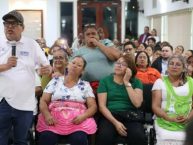
This coming Sunday, May 18 join us for a webinar on maternal health programs like maternity wait homes for women about to give birth. Casas maternas, as they are called in Spanish, along with other Sandinista government programs, have substantially decreased maternal and infant mortality. The speakers will also compare health outcomes in Nicaragua and other nations, particularly the United States.
SPEAKERS:
Becca Renk has lived and worked in Nicaragua for 25 years and directs a health clinic in Ciudad Sandino outside of Managua.
Magda Lanuza, the program manager of Casa Arlen Siu, a casa materna in El Sauce, Leon, will present her research on programs across Nicaragua.
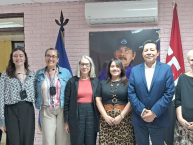
Jameela Alexander, an active organizer in Black Alliance for Peace, visited Nicaragua for the first time in March as a member of the “Power & Protagonism: Women in Nicaragua” delegation. She is a worker/doula who previously studied village midwifery.
NicaNotes: Nicaragua Solidarity Coalition Responds to UN Request for Evidence on Effects of Sanctions
[The UN Special Rapporteur on unilateral coercive measures (or sanctions) made a global request for evidence on unilateral coercive measures and humanitarian action. Given that sanctions against Nicaragua are having a considerable effect on the Nicaraguan government’s humanitarian work, the Nicaragua Solidarity Coalition made a submission to the inquiry on May 1st.]

Anti-sanctions poster shows Nicaragua’s flag and national flower, the Sacuanjoche (Plumeria rubra). Graphic: Quixote Center
Response from the Nicaragua Solidarity Coalition
The Nicaragua Solidarity Coalition is an international coalition of organizations and individuals in solidarity with Nicaragua, supporting its sovereignty and affirming its achievements. We are not affiliated with any governmental entity of any nation. The Nicaragua Solidarity Coalition thanks the Special Rapporteur for her request for input from this civil society organization.
Nicaragua has been subject to illegal unilateral coercive measures (UCMs) since mid-2018, initially imposed by the US government and then followed by other countries allied to the US. This has impacted disaster assistance and development aid. Our submission is organized around the following points:
- A summary of the UCMs imposed on Nicaragua by the United States (US)
- How the UCMs hindered Nicaragua’s access to COVID-19 vaccines and supplies during the pandemic
- How the UCMs limited aid to Nicaragua in the aftermath of two of the strongest hurricanes in Central America’s history in November of 2020
- How UCMs blocking development aid have denied Nicaraguans the right to development at the level they should be enjoying
- A recommendation regarding UCMs and humanitarian action.
Summary of UCMs imposed on Nicaragua since 2018
Around mid-2018, the US government began to impose “targeted” sanctions on Nicaraguan government officials under the Global Magnitsky Act, placing over 60 individuals on the US Treasury’s list of Specially Designated Nationals (the SDN list) by 2023, and many more since then (the EU, UK and Canada have also sanctioned individual Nicaraguans). While this harmed few officials personally since they do not hold assets in the US, it hurt their institutions and the services provided to Nicaraguan citizens. For example, the sanctioning of the then Minister of Health Sonia Castro, one of the most popular and effective public officials in the country, required her replacement because she could no longer conduct needed transactions with foreign entities. As former Minister of Finance Iván Acosta testified to the International People’s Tribunal on US Imperialism on 3 June 2023, “The real purpose of these measures is to break the institutional structure of the country and diminish its ability to generate goods and services to meet the needs of the Nicaraguan people.”
There were other impacts from US pressures, such as the beginning of a significant contraction in Foreign Direct Investment (FDI) in Nicaragua, especially from US persons, a sign of “overcompliance” with the measures. According to Minister Acosta, reduced FDI is also due to “intimidation and disinformation” from the US. After a US-funded coup attempt against the Nicaraguan government in mid-2018, from which the economy suffered tremendous economic damage, the government requested funding from the IMF (with which it had an excellent reputation) to help the country’s economy recovery, but was told privately that the US would not allow it and so no loan facility was offered.
In December 2018, the US Congress passed the NICA Act which directs US representatives at International Financial Institutions (IFIs) to veto loans for Nicaragua. This meant that the four-year program strategy adopted by the World Bank for Nicaragua in early 2018 could not be implemented. The US subsequently blocked funding at several other IFIs. Seven years later, most of the previously approved projects in education, health, energy, and other development areas have been completed and no new development projects have been approved. A 2023 interview with former Minister Acosta revealed that the annual cost to Nicaragua from this loss of funding was over $500 million, even though the IFIs were well aware of the quality and transparency of their portfolios in the country, and of Nicaragua’s high reliance on development assistance given that it is the country with the second lowest GDP per capita in the Americas.
In November of 2021 the US Congress passed the RENACER Act, which reaffirmed the provisions of the NICA Act, asked Congress to consider removal of Nicaragua from the Dominican Republic-Central America Free Trade Agreement (DR-CAFTA) which is crucial to Nicaragua’s economy), and opened the door to more sanctions. During the 2023-2024 Congressional session, a bill was introduced to reaffirm the NICA Act’s blocking of multilateral loans; to propose broad sector sanctions on Nicaragua’s beef, sugar, coffee, and gold industries; to attempt Nicaragua’s removal from DR-CAFTA; to seek to block loans from the Central American Bank for Economic Integration (CABEI), of which the US is not a member and which has come to be Nicaragua’s main source of development funding; and to prevent any investment in Nicaragua by US persons. The bill did not pass during that session, but there are indications it may be refiled in the current session. If passed, it would be devastating to the Nicaraguan economy as the US remains Nicaragua’s largest trading partner. In the meantime, US executive orders have renewed past sanctions, imposed new ones on the gold sector, and limited Nicaragua’s sugar exports to the US.
How UCMs hindered Nicaragua’s COVID-19 pandemic response
In testimony to the International People’s Tribunal on US Imperialism, former Minister of Health Sonia Castro said [about how sanctions limited COVID-19 response],
We faced limited access to ventilators, vaccines, healthcare supplies, and medications to treat the disease.
The United States and other imperialist countries, with their nefarious and harmful foreign policy, perpetrated acts against humanity at critical moments during the pandemic, by hoarding medical equipment and personal protection equipment. The cost of these items increased by 10 to 20 times compared to normal prices.
We sought financing from multilateral organizations to cover the costs of the pandemic, but were not successful until one year later. Then we were required to designate “predetermined” agencies to administer the funds, which caused delays in procurement processes and obliged us to pay the high overhead fees of those agencies.
The hoarding of COVID-19 vaccines by the United States and other developed countries, who stored more vaccine than what was needed for their own populations, created a shortage. It bears mention that Nicaragua was not among the countries chosen by the United States to receive vaccine doses.
Unlike neighboring countries in the region, Nicaragua received no early vaccine donations from the US. Despite having a well-structured system for vaccinating whole communities, its efforts were delayed until vaccine supplies could be obtained via the WHO’s COVAX mechanism and then via other countries such as India, Panama, Russia and Cuba. Vaccination then advanced rapidly via Nicaragua’s community-based health system, where teams ensured that 86% of the population was fully vaccinated by the autumn of 2022, the highest rate in Central America, and 91% had received at least one dose. Many of those who contracted the virus in 2021, including some who died, might have fared better if the government had had access to vaccine doses at the same time as countries not facing UCMs.
How UCMs limited aid to Nicaragua in the aftermath of Hurricanes Eta and Iota in 2020
In November of 2020, two of the most devastating hurricanes ever to hit Central America landed on Nicaragua’s Caribbean coast. Eta and Iota, category 4 and 5 storms, cost little loss of life in Nicaragua due to the government’s robust preparedness, evacuation, and response measures. Countries hit secondarily, including Honduras and Guatemala, were less prepared, offered meager assistance to their populations, and had more significant loss of life. These Northern Triangle countries received extensive disaster assistance and funding after the storms. For Nicaragua, which had borne the brunt of both storms on its vulnerable and high-poverty Caribbean coast, there was minimal aid compared to what was bestowed on its neighbors. Some modest aid was finally approved for hurricane relief and COVID vaccines in Nicaragua during the first half of 2021.
World Bank funding after Hurricanes Eta and Iota was $150 million for Honduras and $60 million for Nicaragua; Nicaragua’s amount was raised to $80 million in February of 2021 as the Bank recognized Nicaragua’s good performance in disaster risk management (DRM) around the storms. Nicaragua suffered damages estimated at $990 million.
How UCMs blocking development aid deny Nicaraguans the right to development
Clearly the most impactful coercive measures on Nicaragua have been those which limit the country’s access to international development funding. As Nicaragua has the second lowest GDP per capita in the Americas, it is a priority country for IFI lending and this aid should be seen as humanitarian assistance. Former Minister of Finance Iván Acosta offered compelling testimony about the impact this has had on the country’s efforts to bring development and prosperity to the population:
*At least 26 projects (from the IDB, World Bank, EXIMBANK, Korea, and the European Investment Bank), have been impacted by the coercive measures, for an overall value of US$1,418,300,000 (over US$1.4 billion). There has been a contraction of loans from an average of US$819.44 [million] during the 2014-2017 period to US$291.09 [million] from 2018-2021. Among the sectors most impacted are: development of production on the Caribbean Coast; school food programs for vulnerable populations; comprehensive child development programs; access to drinking water in rural areas; and assistance for chains of production and the retrofitting of production.
*At the World Bank, the US vetoed a study for the Dry Corridor (impacted by climate change) that was to result in approximately US$80 million in aid and would have directly benefited 800,000 people living in that area. In doing so, they betrayed their slogan of fighting poverty and bringing shared prosperity, as well as the Bank’s founding commitment to respect people’s human rights. Still, our government has not stopped its efforts to aid people in the Dry Corridor.
*Together with the now extinct Lima Group, the US paralyzed important IDB projects that were in the portfolio to be funded for Nicaragua, such as the Esperanza-Wapí Road and the Bilwi wharf (Bilwi’s wooden wharf was destroyed in 2020 by the two hurricanes, and this is a very important public good for communities of the Caribbean Coast). The US accomplished this at the IDB by using its veto power to prevent the country strategy (which expired in 2017) from being updated, denying our people the US$1 billion they would have received. This is despite the fact that our government has been one of the IDB’s best clients. Between 2010 and 2017 we signed agreements for US$1.124 billion; From 2018-2022, the amount was only US$43 million.
*This money would have been used to build 265 kilometers of new roads; four hospitals for an approximate cost of US$62 million each; and improved drinking water systems for the main cities in two departments.
The Minister also provided details about how the Nicaraguan population has benefited from IFI development aid since 2007:
*In the electricity sector, we have brought electricity to the most remote communities in the country, achieving over 99.2% coverage nationally.
*Nicaragua has the best free-of-charge public hospital network in Central America. Between 2007-2022 we built, repaired, expanded, improved, or equipped 1,250 health facilities. By the end of 2022 we had vaccinated almost 6.2 million people with at least one dose of COVID-19 vaccine (96.45% of the population over age 2), and more than 5.9 million people have had the complete primary series of shots, some with boosters (92.98% of the population).
*We have guaranteed access to free, universal education by ensuring the enrollment of 1.8 million students at the preschool, primary, and secondary levels, as well as education for youth and adults and special education and literacy. And we deliver 1.2 million school lunches. We have also increased technical career offerings from 41 in 2016 to over 60 in 2022.
*Our tourism sector has regained its footing, as we received 817,905 tourists in 2022 (a 267.7% increase over 2021).
*We have built or refurbished over 1,350 municipal spaces for the enjoyment of everyone. And we will go on to build 1,500 municipal recreation infrastructure projects (this includes theme parks and natural parks, and community and children’s recreation areas), with over C$1.6 billion Córdobas in investment.
*Our strategies for national security and citizen’s safety, and our firewall against organized crime, are based on strong collaboration between residents of neighborhoods and communities and the forces of law and order to ensure their own safety. In other words, it is basically a community-based policing model in which Community Assemblies play an essential role, which has made it possible to reduce the homicide rate from 13.4/100,000 population in 2005 to 7.0 in 2022.
*As regards social security, we have defended and maintained retirees’ pensions and all enrollee health benefits, despite the harm caused by the failed coup attempt (of 2018). Thanks to the active participation of workers and patriotic business owners (particularly SMEs [small and medium enterprises]), and to the government’s fiscal and budgetary policies, the Nicaraguan Social Security Institute (INSS) closed the year 2022 with 806,583 active enrollees (a 6.7% increase over 2018); and pensions were paid to 322,371 retirees (a 20.9% increase over 2018).
*We have issued more than 600,000 property deeds, thus ensuring legal certainty over the property people own.
*We have made in-person visits to more than 2.5 million families to strengthen and protect peace and discuss issues to help them fully enjoy the rights to which everyone is entitled.
*We have guaranteed healthcare, food, and shelter for all families impacted by natural disasters.
*We have almost doubled the country’s paved roadways. Our roads are ranked as the best in Central America.
*We have increased household drinking water coverage in urban areas from 65% in 2007 to 93% in 2022, while sanitary sewer coverage went from 33% to 50%. This means 1.6 million more Nicaraguans were given clean drinking water and 1.5 million were given proper sewers. In rural areas, drinking water coverage increased from 26.7% of households in 2007 to 55% in 2022, bringing new drinking water services to more than 534,000 people and bringing piped water into over 86,000 more homes. During the same period, sanitation services increased from 36.1% to 49.7%, serving 401,000 additional people.
At the Nicaragua Solidarity Coalition, we also know that these advances go hand-in-hand with improvements to Nicaragua’s Human Development Index. Nicaragua was one of the first countries to achieve the Millenium Development Goals and is doing well with the Sustainable Development Goals. It has made impressive progress in reducing maternal and infant mortality, eradicating child malnutrition, reducing poverty, and bringing more rights and better living conditions to women, Afro-descendants, and Indigenous peoples. Please visit the “At a Glance” page on our website for more information about the progress being made for a majority of Nicaraguans since 2007.
These are the programs being impacted by sanctions on Nicaragua. While ostensibly aimed at the government itself, UCMs prevent Nicaragua’s low-income households from enjoying full humanitarian action by the government as part of its very well-developed National Development Plan 2021-2026. Since 2007, Nicaragua has produced an updated development plan every 4 to 5 years based on the evaluations of previous plans. As a result, the government has made tremendous progress in reducing poverty and extreme poverty, but inevitably this has not been as fast or as effective as it might have been in the absence of UCMs.
A recommendation regarding UCMs and humanitarian action
In the situation of Nicaragua, UCMs have been a severe hindrance to humanitarian assistance in times of emergency, such as the COVID-19 pandemic and two exceptional hurricanes. They have also been a constant obstacle to human development in the country, particularly development facilitated by government programs aimed at supporting the needs of the population and especially of its poorest communities. In fact, we cannot imagine a situation in which UCMs would be compatible with humanitarian action. Therefore, we urge the Special Rapporteur and the United Nations system to do everything within their power to condemn, forbid, and end the use of economic coercive measures.
The UN General Assembly, the organization’s highest decision-making body, has clearly condemned the use of UCMs. However, as in the case of Nicaragua, political manipulation of some UN bodies, such as the Human Rights Council, has led to recommendations that violate the UN’s own policies. For example, the so-called “Group of Human Rights Experts on Nicaragua” (the “GHREN”) has recommended the continuance and further use of UCMs in several of its reports, including the one issued in February of this year. That document called on governments to “expand legal actions and sanctions” against individuals and entities linked to the Nicaraguan government. Such wording legitimizes UCMs and perpetuates and intensifies the problems identified in this submission.
The GHREN also specifically argued for Nicaragua’s treatment under the DR-CAFTA trade treaty to be conditioned on “human rights benchmarks.” Since the treaty has no such benchmarks, this is in effect an invitation to the US or other countries within DR-CAFTA to take unilateral action against Nicaragua, along the lines of recent legislative proposals in the US Congress. If such action resulted in Nicaragua’s suspension from the trade treaty, it would do immense harm to its economy and to its progress in reducing poverty and addressing the humanitarian needs of its lowest-income communities.
In conclusion, we strongly urge the United Nations to be consistent in its condemnation of the use of coercive economic measures and to ensure that its own bodies and expert groups abstain from recommending their use.
* * * * *
Briefs
By Nan McCurdy
Women in High Government Roles: Nicaragua Ranks First in the World
Nicaragua is first in the world (64.3%) in women serving as heads of ministries as of January 2025, and ranks third in the world for its share of women legislators (55%). This is according to data that the Inter-Parliamentary Union (IPU) and United Nations Women presented in their recent report entitled “Women in Politics: 2025”. In a list of about 200 countries, Nicaragua heads the top five countries with the highest representation of women at the helm of government ministries worldwide: 1. Nicaragua; 2. Finland; 3. Iceland; 4. Liechtenstein; and 5. Estonia.
In legislative representation, reflecting elections/appointments up to January 1, 2025, Nicaragua is third in the top five countries worldwide: 1. Rwanda; 2. Cuba; 3. Nicaragua; 4. Mexico; and 5. Andorra. In Cuba, women form 55.7% of the legislature, in Nicaragua 55%, and in Mexico 50.2%. Other Latin American countries also ranked relatively high in women’s representation: Costa Rica ranked 7th and Bolivia came in 8th. Only six countries in the world have achieved gender parity in their lower or single national assembly, congress, or parliament as of January 1. As a region, the Americas has the highest percentage of women in unicameral legislatures or in the lower house of a two-chamber legislature, with 35.3%, beating Europe, which ranked second with 31.8%. The world average is 27.2%. Despite the successes in women’s representation in Latin America and the Caribbean, the average of the top-ranked Americas region is brought down by the poor performances of the United States and Canada, with the United States ranking 77th in the world and Canada, 69th. (https://www.unwomen.org/en/digital-library/publications/2025/03/women-in-politics-map-2025, April 1, 2025; https://kawsachun.com/nicaragua-1-in-the-world-for-women-in-top-government-roles/
May 13, 2025)
Nicaragua: Higher on Human Development Index than Northern Triangle Nations
Nicaragua is evaluated more favorably than neighboring El Salvador, Guatemala and Honduras in the UN Human Development Index. It is the only one of the four countries with “high” human development, despite the fact that it is poorer than the other three. The index considers the nation’s education, health, living conditions and income to provide a measure of human development. An interesting factor is that since national income per capita is taken into account in calculating the index, Nicaragua has to be much higher in terms of health and education to have a better “score” than the other three countries. As expected, Costa Rica and Panama have higher scores (and so does Cuba, despite its very low per capita income.) The United Nations Development Program (UNDP) compiles the Human Development Index (HDI) of 193 countries in their annual Human Development Report. HDI is the most widely used indicator of human development. The UN also publishes a Gender Development Index. See this link for more details and tables: https://en.wikipedia.org/wiki/List_of_countries_by_Human_Development_Index#
Nicaraguan Representatives Attend Russia’s Victory Day Celebration
World leaders from China, Brazil, Venezuela, Cuba, Nicaragua, Serbia, Slovakia, Congo, Mongolia, Armenia, Venezuelan and many others were among the guests at the 80th anniversary of the Soviet Union’s victory over Nazi Germany in World War II. The annual May 8 commemoration of the Soviet Union’s victory over Nazi Germany is one of the most important days in the Russian calendar. Russian President Vladimir Putin greeted Laureano Ortega, special envoy of Nicaraguan Co-Presidents Daniel Ortega and Rosario Murillo, who is leading the delegation from Nicaragua to attend the events. A joint statement by Chinese leader Xi Jinping and Russian leader Vladimir Putin went further than previous ones in directly condemning the United States saying that “Unilateral coercive measures (UCM’s), including economic sanctions, that bypass the UN Security Council, violate the UN Charter and other international laws and undermine international security interests.” [Nicaragua is a victim of US sanctions and currently is hardly able to get even small loans from the World Bank, the International Development Bank, and others. See above.] (El 19 Digital, La Primerisima, 9 May 2025)
New Days Addiction Rehabilitation Center Opens in Matagalpa
On May 9, the New Days Addiction Recovery Center was inaugurated in the community of Apante in Matagalpa. It will serve people with addictions to alcohol and/or drugs. Psychologist Blanca Vallecillo, director of the Center, said that it can work with up to 47 people at a time. This center is part of the New Days Foundation which works in coordination with the Ministry of Health. Admission to the center is voluntary; patients must be aware of their condition and have at least one week without consuming alcohol and/or drugs to enter the program. “We make a general invitation to the entire population; we are a family here; we are a team. Participants must be at least 18 years old, come voluntarily and be accompanied by their family when they enter,” said the director of the Center. The people who enter the program will have individual, group and even family therapy. (La Primerisima, 9 May 2025)
School Lunch Products Distributed in Managua Schools
On May 11, the Ministry of Education (MINED) completed the second distribution of non-perishable food for the School Integral Nutrition Program which will be prepared for 122,000 students in 600 educational centers in Managua. The basic food products are distributed four times a year to preschools, primary schools, child development centers, special education schools and others, including both primary and secondary schools in the countryside. The school lunch is a ration of daily food guaranteeing more or less 30% of the children/youth’s diet. Sergio Mercado, MINED Delegate for Managua, said, “The children learn and respond better in class and it has helped us to organize the educational community in the School Food Committees.” See photos: https://radiolaprimerisima.com/distribuyen-merienda-escolar-para-122-mil-estudiantes-de-managua/ (La Primerisima, 9 May 2025)
Nicaragua Signs Four Contracts with Chinese Companies
On May 11, the delegation of Nicaraguan government officials, who are in Beijing, China, to participate in the ninth ministerial meeting of the China – CELAC Forum, signed four contracts with Chinese companies in the areas of technology, transportation and communications. The delegation is headed by presidential advisor Laureano Ortega and includes Foreign Minister Valdrack Jaentschke, Central Bank President Ovidio Reyes, and others. The parties signed an agreement to execute the Digital Connectivity Project to strengthen telecommunications in Nicaragua. A contract was also signed with China Communications Services International (CCSI) for the installation of intelligent logistics management platforms at the Julia Herrera Logistics Center in Corinto. The delegation also signed a contract with the company YUTONG for the supply of buses and municipal cleaning machinery, and a contract with the company POLY Technologies for the supply of equipment for the Nicaraguan Army to strengthen the defense of sovereignty and peace. The Nicaraguan delegation held meetings with the Chinese companies HUADIAN and POWERCHINA, with which the Tumarin and Mojolka hydroelectric projects are being developed, and with companies of the Nicaragua/China Chamber of Commerce for the development of mining, banking, industrial and commercial exchange projects. (La Primerisima, 11 May 2025)
Nicaragua Meets with Chinese Foreign Minister at China-CELAC Forum
The fourth ministerial forum of China-CELAC (Community of Latin America and Caribbean States) is being held in Beijing, China. This yearly forum facilitates communication and cooperation between China and Latin America. On May 13 President Xi Jinping vowed to boost China’s support of Latin America and the Caribbean with a new US$9 billion credit line and fresh infrastructure investment. Two-thirds of Latin American nations have joined Beijing’s Belt and Road Initiative, an infrastructure program.
A high-level meeting was held between the Nicaragua delegation and Chinese Foreign Minister Wang Yi preceding the Forum where the Foreign Minister conveyed the greetings of President Xi Jinping to the Co-Presidents of Nicaragua and reiterated the high importance that China attaches to the relationship with Nicaragua, describing them as good friends who share a deep kinship based on common vital interests, sovereignty, international justice and mutual respect. (La Primerisima, 12 May 2025)