By John Perry and Roger D. Harris
[Nicaragua-based John Perry is with the Nicaragua Solidarity Coalition and writes for MR Online, the London Review of Books, FAIR and CovertAction, among others. Roger D. Harris is with the Task Force on the Americas, the US Peace Council, and the Venezuela Solidarity Network. This article was first published in Dissident Voice.]

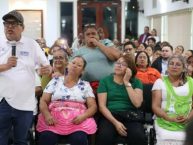
Nicaragua’s 180 “casas maternas” or maternal waiting homes, assisting women in the late stages of pregnancy, have drastically reduced maternal deaths. (Photo: Popular Resistance)
“We look for the poorest patients,” the Cuban doctor in charge of the eye clinic said. “Often we travel to remote rural areas and bring them to the clinic in a bus.” The clinic, in Ciudad Sandino, Nicaragua, was part of Misión Milagro (Miracle Mission), run jointly by the Cuban and Venezuelan governments. The larger mission has treated over seven million patients in 33 countries since 2004. Local Nicaraguan doctors, trained by the Cubans, are now in charge in Ciudad Sandino.
Misión Milagro is despised by US Secretary of State Marco Rubio. Washington has imposed sanctions on officials in countries using this and other Cuban medical missions. Supposedly aimed at stopping the “trafficking” of medical staff, the real intent is to destroy services that have proved immensely popular for their free, high-quality treatment, often in remote areas with few health facilities. The US falsely demonizes Cuba’s aid as “forced labor,” which is also a source of income for the besieged county.
Successes of Rubio’s “enemies of humanity”
Rubio’s attack on medical brigades is only the most recent example of the hybrid warfare conducted by successive US administrations against Cuba, Venezuela and Nicaragua. Already designated as “strategic threats” to US security, according to Rubio, these countries are now also labelled “enemies of humanity.” In reality, all three countries have made major advances in human development, albeit constrained (most heavily in Cuba’s case) by Washington’s attacks.
Cuba’s medical brigades derive from its community-based health system, whose success is recognized in medical journals and affords Cubans with a three years’ greater life expectancy than people in the US. Health services in Venezuela and Nicaragua have learnt from this model. For example, Nicaragua’s 180 casas maternas, assisting women in the late stages of pregnancy, have drastically reduced maternal deaths.
Venezuela leads Latin America and the Caribbean (LAC) in building affordable housing: its Great Housing Mission, begun in 2011, handed over its five-millionth home a year ago. Nicaragua is building more than 7,000 “social interest” homes annually.
Cuba, sadly, has an ongoing housing crisis principally caused by the US embargo producing a severe shortage of building materials. One-third of homes are unfit, while its 13,500 annual building program inevitably falls short.
However, Cuba invested in its education system during the most prosperous years of the revolution, when it benefited from the international solidarity of the Soviet Union. Cuba’s schools serve the most remote communities and attendance is close to 100%. ELAM, its medical school for internationals, has trained an astonishing 31,180 doctors from 122 countries.
Venezuela invested heavily in education as a means of empowering the populace, building thousands of new schools in under-served barrios and rural areas. By 2005, illiteracy was eradicated using Cuban-developed methods. By 2008, four out of five young adults were enrolled in higher education, the highest rate in the region.
All three countries guarantee free education at all levels, including university. Nicaragua, for example, has created new technical colleges training some 46,000 students.
Cuba and Nicaragua are two of LAC’s safest countries. A common factor is that their police forces were completely reformed, post-revolution, and they have been able to limit drug trafficking and keep at bay the violent gangs that bedevil other countries.
The Venezuelan revolution inherited chronically high crime levels, but in recent years has achieved a significant decrease in homicides, which has been publicized not only by Caracas but by the US president. However, Trump deceitfully claims Venezuela has achieved this by deliberately exporting its criminals to the US.
In terms of national security, Nicaragua and Venezuela have among the lowest military spending levels in the LAC region; Cuba, subject to constant US threat, is among the highest. Nevertheless, its spending of around $130 million annually pales by comparison with that of over a trillion by the US.
Socially conscious foreign policy
Perhaps most challenging to the US has been the independent foreign policy and the championing of regional integration by the three countries striving for socialism.
Back in 2004, Venezuela and Cuba successfully founded ALBA (Bolivarian Alliance for the Peoples of Our America), scuttling Washington’s neoliberal free trade FTAA initiative. Venezuela followed with PetroCaribe, supplying oil to Caribbean nations on favorable terms. The founding of CELAC (Community of Latin American and Caribbean States) in 2010, again spearheaded by Venezuela, provides an alternative to the US-dominated OAS (Organization of American States) as a region-wide political forum, which explicitly excludes the US and Canada.
The three leftist states have also been international leaders in support of Palestine. Cuba was the first country in LAC to formally sever diplomatic relations with Israel in 1973. Nicaragua severed relations in 1982. These were temporarily reinstated by the neoliberal government in 1993, only to be again severed in 2010 after the Sandinistas returned to power. Venezuela severed relations with the Zionist state in 2009. Also in 2009, fellow ALBA nation Bolivia severed relations with Israel. These were temporarily reinstated in 2019 by the Áňez coup regime but again severed by current Bolivian President Luis Arce in 2023. Last year, Nicaragua filed a case against Germany at the International Court of Justice over its military and political support of the genocide in Gaza by Israel.
Human rights weaponized
Washington disregards the achievements in these three countries that former Trump functionary John Bolton called the “troika of tyranny,” instead weaponizing “human rights” to characterize them as authoritarian dictatorships. This is hypocritical in two senses.
One is that their human rights records are, by any standards, no worse than many other countries in the region, and are in most respects better than that of the US itself.
The other is that the US has been the primary cause of tightened security in these countries. The alleged limits on political expression are a response to constant interference – military interventions, coup efforts and assassination attempts. Biden, for instance, upped the bounty on the head of Venezuela’s president to $25 million.
Washington leads the chorus of complaints when a demonstration in Cuba is suppressed or a political party in Venezuela or Nicaragua banned. The US tries to act as if it were an impartial observer, rather than – as is invariably the case – the funder or supporter of whatever opposition group is being “victimized.”
Washington’s concern about “human rights” is a charade, which disappears if the government in question is a US client state; e.g., El Salvador.
If countries pose a “strategic threat” to US interests, it is because of their record in improving the most important human rights which, according to the United Nations, are “the right to life, food, education, work, health, and liberty.” In respect of these wider rights, Cuba, Venezuela and Nicaragua show that huge progress can be made by progressive, revolutionary governments which have rejected the neoliberalism pursued in LAC countries favored by Washington.
Sanctions on Venezuela led to the deaths of over 100,000 Venezuelans by 2020. The blockade of Cuba, costing the country $13.8 million daily, is so destructive that nearly one in ten Cubans has left the country in the last three years. Nicaragua is losing $500 million in development funding annually because the US is blocking loans from the World Bank and other institutions.
It could hardly be more obvious that Washington’s aim is to destroy each country’s social achievements and impoverish their people so that those who do not die, fall sick or migrate eventually will rise up against their governments. And then the likes of Rubio makes inane statements such as offering “unwavering support and solidarity for the Cuban people.”
Washington’s endgame
What do successive US administrations and the opposition groups that they support actually want to achieve in the targeted countries?
Over 30 years ago, prominent Cuban exiles were calling for “a sudden, dramatic and, if necessary, convulsive shift to free-wheeling capitalism.” Twenty years ago, the Commission for Assistance to a Free Cuba, set up by President George W. Bush, set out a broad neoliberal vision for the country. A trawl of recent statements by exile groups reveals many vague demands for “democracy,” “transparent institutions,” “support for youth,” and so on, with some limited, specific proposals such as “restitution of property rights” (for Cubans in Miami looking to cash in on potentially valuable property their families abandoned 60 years ago).
The Nicaraguan opposition is profoundly divided between left and right, with the right wanting to exclude the left from power, while the marginal “left” opposition has never had significant political support (Sandinistas successfully mobilize the progressive vote in elections). The UNAMOS party, some of whose members were formerly Sandinista officials in the 1980s, offers a program focused on restructuring the government with only vague objectives for social development.
The far-right opposition in Venezuela, led by Washington’s darling Maria Corina Machado, promises a bloodbath with no amnesty for the Chavistas. Machado’s surrogate Edmundo González Urrutia ran for the presidency in 2024 on a platform calling for extreme neoliberal privatization of education, health care, housing, food assistance, and the national oil agency.
Regardless of the expressed aims of opposition groups, the likely outcome if one or more of the three governments lost power is evident. The coup attempt in Nicaragua in 2018 was a foretaste: murders of police and of Sandinista sympathizers, uncontrolled availability of firearms, empowerment of local criminals, importing violent gang members from El Salvador, destruction of public buildings and much more.
The kind of anarchic chaos that exists in Haiti is a very possible outcome, possibly leading to a repressive, authoritarian regime – but Washington-friendly – like that in Bukele’s El Salvador.
The often-overlooked accomplishments of Cuba, Nicaragua and Venezuela have been made despite enduring aggressive US interventions. Washington continues to hypocritically weaponize human rights, using hybrid warfare to erode these achievements and justify regime change as a democratic project.
Briefs
By Nan McCurdy
Advances in Intrauterine Fetal Surgery Presented at Pediatric Congress
The significant progress by Nicaraguan physicians in intrauterine fetal surgery was presented at the International Pediatrics and Neonatology Congress in Managua, which ended on June 20. Pediatric surgeons and neonatologists from countries such as Mexico, Chile, and Colombia shared advances in minimally invasive surgical techniques and the growing use of artificial intelligence in pediatric genomic medicine. The Pediatrics Congress emphasized how modern surgical facilities and specialized training are enhancing infant healthcare in Nicaragua. These medical advancements aim to improve the outcomes of conditions like hydrocephalus and neural tube defects by addressing them before birth. The event highlighted the importance of technological innovation and international collaboration in advancing fetal surgery throughout Latin America. Nicaragua is a leader in this kind of surgery with more than 300 surgeries performed. (La Primerisima, 19 June 2025)
Government Acquires Equipment to Detect Heart Conditions
The Nicaraguan government has installed two modern angiography systems at Manolo Morales and Manuel de Jesús Rivera Hospitals in Managua, along with three cardiac stress test systems in hospitals in Bluefields, Masaya, and Managua. These diagnostic tools—funded by the central government and municipal authorities—aim to strengthen early detection and clinical capacity for cardiovascular health. By equipping major public hospitals with advanced imaging and testing capabilities, the initiative is designed to improve diagnosis, treatment, and monitoring of heart disease across the country. Health officials underscore that earlier detection could significantly enhance patient outcomes and reduce long-term complications. (Radio La Primerísima, 19 June 2025)
Investment in Energy Projects Surpasses US$5 Billion
The Nicaraguan government has invested some US$5 billion in energy sector projects since 2006, with a significant shift toward renewable sources—from just 25 % renewables in 2007 to a minimum of 70–88 % today from solar, wind, geothermal, biomass, and hydroelectric power. This funding has enabled major developments, including the China-backed El Hato solar project in Matagalpa, and substantial expansions in generation, transmission, distribution, and fiber‑optic infrastructure. Between 2007 and 2024, total energy sector investment reached US $4.88 billion, split across distribution (US$1.30 billion), generation (US$2.56 billion), and transmission (US$1.03 billion). These efforts have expanded capacity by 895 MW (from 754 MW to 1,649 MW) and achieved national electrification coverage of over 99.5 % [99.5% of homes now have electricity]. (Radio La Primerísima, 18 June 2025)
Exports Exceed US$3.5 Billion
On June 24 the Ministry of Development, Industry and Commerce (MIFIC) reported that Nicaragua’s total exports reached US$3.567 billion between January and May 2025, reflecting a growth of 11.57% over the US$3.197 billion registered in the same period of 2024. This increase, according to the report prepared by the General Directorate of Foreign Trade (DGCE), confirms the dynamism of Nicaraguan foreign trade, driven by key sectors such as raw gold and coffee. Commodity exports totaled US$2.2 billion, a notable increase of 20.68% with respect to 2024, while Free Trade Zone exports reached US$1.343 billion.
Raw gold led total exports with US$724.67 million, an increase of 33.07% over 2024, representing 20.32% of total exports. It was followed by coffee, with US$475 million, which experienced a 68.38% growth and a 13.32% share. Other notable products include beef (US$355.61 million, +9.47%) and garments (US$700.84 million, +1.06%). Exports of agricultural goods totaled US$1,539.4 million, 13.43% more than in 2024, with a contribution of 43.16% to total exports. Free Trade Zone products decreased by 8.04% (US$199.78 million). Products such as cacao beans (+168.95%) and red beans (+3.93%) also showed a positive performance.
Exports to the European Union totaled US$280.88 million, an increase of 27.59% over 2024 while others also increased. Belgium (US$111.51 million, +17.40%), Germany (US$52.43 million, +98.25%) and the Netherlands (US$37.95 million, +34.33%) were the main destinations. Products such as coffee and gold stood out in this market. This reflects the competitiveness of Nicaraguan products in the global market. (La Primerisima, 24 June, 2025)
Skateboarders Participate in Skateboarding Day
More than 120 young skateboarders participated in a skate that began at Kilometer 9.5 of the road to Masaya and ended at Luis Alfonso Velázquez Park in the center of Managua. The activity was organized by the Managua Mayor’s Office and the Alexis Argüello Sports Movement, in commemoration of International Skateboarding Day. In Managua skateparks have been built with ramps that allow young people to practice the sport safely. There is also an academy where they can learn to perfect their skills. Skateboarding emerged in the mid-20th century as an alternative for surfers on days without waves and has established itself as a cultural and sporting expression for followers around the world. See photos: https://radiolaprimerisima.com/patinadores-participan-en-rodada-por-el-dia-del-skateboarding/ (La Primerisima, 22 June 2025)
Thousands Walk in Honor of Carlos Fonseca
In every part of the country walks were held in honor of Carlos Fonseca’s birthday, June 23, which was also Father’s Day in Nicaragua. This is the 89th anniversary of his birth. Carlos Fonseca is considered the father of the Sandinista Revolution and of the Sandinista Front for National Liberation. He was killed by the Somoza National Guard in 1976, before the triumph of the revolution. See photos and videos: https://radiolaprimerisima.com/caminatas-en-honor-a-carlos-en-todo-el-pais/ (La Primerisima, 21 June 2025)
Excerpts from the President’s Speech on Anniversary of Carlos Fonseca’s Birth
On June 23, Co-President Daniel Ortega spoke at an event honoring the memory of Carlos Fonseca on the 89th anniversary of his birth. The event, which took place at the Olof Palme Convention Center, also included the promotion to the rank of Commissioner General of several senior Police Commissioners. Here are some excerpts from his speech:
Unity is fundamental to defend peace and progress
Today, on this day in which we commemorate our brother Carlos Fonseca, on the day of his birth—and he is in another space but he is here present, present in the Nicaraguan people, present in the soul of the peasants, of the workers, of the youth, present in the fighting spirit to defend peace, of the Police and the Army.
These are times in which it is obvious that what we have to take care of most is peace, because war, violence, interventions, aggressions, are multiplying in a good part of our planet, and there are regions where peoples are even being massacred, peoples are being destroyed, like the Palestinian people, a heroic people, who continue resisting, defending their right to life, their right to have a home.
And then we hear about the atomic weapon.… [T]here were commitments in the United Nations not to have atomic weapons, but the imperialists of the earth, who have the capacity and the resources to build atomic weapons, have built them, and they do not allow another country to build atomic weapons. How they burst with fury when the President of North Korea announced that they were not going to stand idly by in the face of aggression as they are constantly surrounded, threatened, by the weapons of the US army. And North Korea is a small nation, a small territory. Iran’s territory is much more immense and so is Iran’s population, more than 90 million inhabitants in Iran. And [North Korea] has been clear in saying: if they attack us, we will not hesitate to respond with the atomic weapons we have. Because they have atomic weapons, they have managed to build them under difficult conditions, and that makes them untouchable. That is to say, it would seem that in order for no country in the world to be attacked, sanctioned, invaded, bombed, all countries should have their atomic weapons, their atomic rockets, then no one would move, no one would attack.
But the way forward is not to multiply atomic weapons in the world. We have declared Latin America a zone of peace, free of that type of armament. And the challenge facing humanity, especially challenging the imperialists of the earth, is to begin to destroy atomic weapons. Otherwise, all peoples are threatened and blackmailed when an imperialist power dares to launch bombs when a country is not at war, to destroy the laboratories that have been working in Iran, under the inspection of the International Agency of the United Nations [IAEA]. Why? To make sure that Iran’s program was a program – as they have explained it – of development in the nuclear field, but for peaceful use. Because in many countries, including the US, there are atomic energy plants and they are very safe, very stable and the cost is also the lowest at the time of generation, and that is what they were inspecting there. And after the US dropped the bombs on Iran, on the points where the laboratories were supposedly located, it turns out that all this is theater; because the President [Trump] who sends the rockets is doing it to help the government of Israel. At the same time, the government of Israel, which has atomic weapons, does not accept inspection, and nobody inspects them.
And what is the United Nations for? What is the United Nations for? For nothing! For nothing! Because no matter how much we talk in the United Nations, no matter how many agreements are made in the United Nations, they are not fulfilled. Ah, if the agreement is to attack a country, that agreement is fulfilled. If the agreement is to invade, bomb, destroy Libya, that agreement is fulfilled, just as they assassinated our brother Muammar Gaddafi.
When the majority in the UN [General Assembly] demands that the blockade of Cuba be lifted after 63 years, in a vote where practically everyone votes in favor of lifting the blockade of Cuba, there are two or three countries, Israel and the United States, which vote against it. It is of no use for the vast majority of the peoples of the world to vote there in favor of lifting the blockade of Cuba, because nothing happens, and the blockade is instead tightened, and what they provoke is suffering among the people of Cuba, a heroic people. …. The conditions do not exist in the United Nations for achieving compliance with the votes of the UN General Assembly or of UN organisms.
Father Miguel D’Escoto, when he was President of the United Nations General Assembly on behalf of Nicaragua, he made the proposal that it was necessary to rebuild, that it would be necessary to refound [the UN]. Refound, what does it mean? To put an end to the foundations that the United Nations has now, that those who maintain those foundations are the major powers. We would have to take that power away from the powers and give it to all the peoples, to all the nations, and in that way the United Nations would make sense.
To read the whole speech: https://radiolaprimerisima.com/la-unidad-es-fundamental-para-defender-la-paz-y-el-progreso/ (La Primerisima, 24 June 2025)