NicaNotes
January 8, 2026
Venezuelan President Maduro Declares Himself a “Prisoner of War” Before a New York Court
By Resumen Latinoamericano
[This article was published in Resumen Latinoamericano out of Buenos Aires on January 6, 2026. It can be read in Spanish here.]
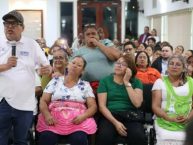
Supporters of Nicolas Maduro in Caracas demand his return. Photo: Resumen Latinoamericano.
The president of Venezuela, Nicolás Maduro, made his first statements before a New York court after his kidnapping on January 3 by specialized U.S. military commandos in a military operation carried out on Venezuelan territory. The president declared himself a “prisoner of war” and categorically rejected the charges against him, reaffirming his status as the legitimate head of state of the Bolivarian Republic.
“I am the president of Venezuela and I consider myself a prisoner of war. I was captured in my home in Caracas,” the Venezuelan leader declared before the judge, describing the circumstances of his detention as a military action that violates his presidential immunity and the sovereignty of his country. The declaration establishes the framework under which Maduro legally interprets his situation: not as a criminal defendant, but as a head of state kidnapped in the midst of an international conflict.
The First Lady of Venezuela, Cilia Flores, also declared herself innocent of the charges against her and requested a consular visit for herself and President Maduro.
During his court appearance, the Venezuelan president was emphatic in rejecting the accusations made by the U.S. justice system. “I am not guilty, I am a decent man, I am still the president of my country,” Maduro declared before the judge, establishing a fundamental distinction between his role as a democratically elected head of state and the charges Washington is attempting to bring against him.
The Venezuelan president’s legal team raised outstanding issues related to presidential immunity and the legality of his detention. A legally crucial aspect during the hearing: the president stated that he was unaware of the charges against him. This detail is fundamental in procedural terms, since, according to international law and due process guarantees, every accused person must be formally notified of the charges against them before being detained or brought before a judge.
First Lady Deprived of Medical Attention
Venezuela’s First Lady, Cilia Flores, who was captured alongside President Maduro during the assault and bombing carried out by U.S. armed forces, is suffering from “significant injuries” that have not received adequate medical attention since her abduction early Saturday morning.
The information was released by Flores’s lawyer, Mark Donnelly, who stated that the injuries suffered by Maduro’s wife “are visible” and described the wounds as “significant.” The First Lady has been without medical assistance for almost three days, a situation that constitutes a flagrant violation of more than four international conventions on the treatment of detainees and prisoners.
Donnelly said that Flores may have fractures and possibly a severe rib hematoma, making it imperative that she undergo a complete physical examination. Judge Hellerstein instructed the defense to coordinate with the prosecution to ensure the necessary medical attention, although the origin of the injuries was not specified, nor was a concrete timeframe established for the evaluation.
The Geneva Conventions and other international treaties establish clear obligations regarding the humane treatment of captured individuals, including immediate access to medical care when necessary.
The judge upheld the right of both detainees to communicate with their consular officials, a fundamental prerogative established in the Vienna Convention on Consular Relations. President Maduro expressed his desire to receive this consular visit, exercising a basic right recognized internationally for any person detained in foreign territory.
The next hearing was scheduled for March 17 at 11:00 a.m., establishing a period of more than two months during which both the president and the first lady will remain in U.S. custody.
Simultaneously, Venezuela’s Permanent Representative to the UN, Samuel Moncada, reiterated the South American nation’s commitment to peace and presented the following urgent requests: “Venezuela urges this Security Council to fully assume its responsibility and act in accordance with the mandate conferred upon it by the Charter of the United Nations.”
The first of these demands urges the government of the United States of America to guarantee full respect for the diplomatic immunities of President Nicolás Maduro and First Lady Cilia Flores. This demand includes the immediate cessation of any legal action against them and their safe return to the Bolivarian Republic of Venezuela, in accordance with international law.
The kidnapping of President Nicolás Maduro occurred on January 3, 2026, when specialized U.S. military commandos carried out a military raid on his residence in Caracas killing over 80 people including 32 Cubans serving on Maduro’s security detail.
From Caracas, Venezuelan authorities immediately denounced the operation as an attempt to “decapitate” the Bolivarian government, generate an institutional crisis, and pave the way for imposing an executive branch controlled from Washington. The Constitutional Chamber of Venezuela’s Supreme Court of Justice (TSJ) responded by ordering Executive Vice President Delcy Rodríguez to assume all presidential functions in an acting capacity, thus guaranteeing the institutional continuity of the State.
Acting President Delcy Rodríguez presided over the 757th Council of Ministers meeting this Sunday, demonstrating the full operational capacity of the Venezuelan state apparatus. The ministerial session, which included the participation of sectoral vice presidents and ministers of strategic areas, signified stability and governability in the face of external aggression.
Meanwhile thousands of Venezuelans protested in the streets of Caracas and other cities calling for the return of their Bolivarian president.
Briefs
By Nan McCurdy
Nicaragua Demands Respect for Latin America as a Zone of Peace
On January 5 Nicaragua called on the United Nations Security Council to fully respect Latin America and the Caribbean as a zone of peace, a decision taken by the peoples and governments of the region. The position was presented by Jaime Hermida Castillo, Nicaragua’s representative to the UN, who recalled that the Community of Latin American and Caribbean States (CELAC) declared the region a zone of peace as a direct contribution to international law, the UN Charter, and peaceful coexistence among states. He noted that this commitment must be respected by all governments around the world, especially by the members of the Security Council.
During its intervention, Nicaragua supported the statement made by the interim President of Venezuela, Delcy Rodríguez, calling for the immediate release of the constitutional president of that country, Nicolás Maduro Moros, and the first lady/first combatant of the homeland, Cilia Flores.
“All member states of the United Nations have a duty to respect international law, the spirit, purposes, and principles of the United Nations Charter, the right to sovereignty, self-determination, territorial integrity of states, non-interference, and peaceful coexistence,” he said.
“The Venezuelan people are the dignified people of Bolívar, Chávez, and Maduro, historically unyielding in defending their sovereignty and their right to peace. Nicaragua will always stand with Venezuela. Peace has been deeply wounded, and we urge the human family, the community of nations, and the peoples of the world to restore it as an absolute reflection of the dignity of all peoples,” he concluded. (La Primerisima, 5 January, 2026)
Christian Churches Confirm Full Religious Freedom
The full exercise of religious freedom and worship remains in force in Nicaragua, the Federation of Evangelical Churches (FIENIC) said in a statement on December 20.
As a representative body for a large sector of the country’s evangelical Christian community, its leaders respectfully addressed national and international public opinion to state that Christian churches and ministries continue to carry out their spiritual, pastoral, and evangelistic activities on a regular basis throughout the country, in accordance with the established legal framework. The federation addressed this issue in response to recent reports in some media and digital outlets suggesting alleged restrictions on the entry, circulation, or distribution of the Holy Scriptures.
In this regard, it categorically clarified that there are no prohibitions limiting the use, transfer, or delivery of the Bible in the country, and that these actions are carried out normally and in compliance with current legal provisions. “Our churches and ministries maintain an active and permanent presence in communities, educational centers, hospital care units, and prisons, where spiritual accompaniment and biblical teaching are freely carried out as part of pastoral work aimed at promoting values, social peace, and strengthening families,” he said. (La Primerisima, 21 December 2025)
Nicaragua Reduced Neonatal Mortality by 65%
The Sandinista Popular Revolution continues to advance in the protection of life, achieving a 65% reduction in neonatal mortality between 2024 and 2025, thanks to improvements in the healthcare model. This progress has been possible by strengthening care during pregnancy, childbirth, and the first days of life; the improvement of equipment in health units and neonatal care rooms; support from maternity homes; and the ongoing training of health workers. See photos: https://www.el19digital.com/articulos/ver/172245-reducimos-en-65-la-mortalidad-neonatal-gracias-al-fortalecimiento-del-modelo-de-salud (El 19, 24 December, 2025)
Largest Steel Plant in Central America Inaugurated
A steel plant, considered the most sophisticated and largest in all of Central America, was inaugurated on December 23 by officials from the Sandinista government and the People’s Republic of China. The American Steel Plant for Recycling and Processing Materials is located on the Masaya-Tipitapa highway, kilometer 29, in the Guanacastillo district. Sixty million dollars was invested in the construction of the plant.
It will generate 500 direct jobs, contributing significantly to the country’s economic and social development. With the start-up of this plant, Nicaragua and the Central American region will have steel products for construction, manufactured under the highest standards of quality and sustainability, which will allow for better prices for the construction sector in the country and throughout the region. Mr. Hangbin Xie, legal representative of American Reciclin, said that this is both a fruitful result of economic and trade cooperation between China and Nicaragua and a clear manifestation of the friendly relations between the two countries. See photos: https://radiolaprimerisima.com/2025/12/23/inauguran-planta-siderurgica-mas-grande-en-centroamerica/ (La Primerisima, 23 December 2025)
6.7% Wage Hike Ratified in Free Trade Zones
Starting January 1, 2026, the minimum wage for the 116,000 workers in the country’s free trade zones will be US$282/month with the 6.7% adjustment, signed in a tripartite agreement, Pedro Ortega, secretary general of the Sandinista Workers’ Union, told La Primerísima. He explained that this adjustment for the free trade zones must be made by the 186 companies in the textile, clothing, tobacco, call center, and auto wiring harness industries throughout the country. With this adjustment, plus incentives and other benefits, workers will be able to earn at least US$394/month. In the free trade zones, 54 percent of the workforce are women, and the companies are owned by Korean, US, Canadian, Mexican, and Nicaraguan capital. (La Primerisima, 29 December, 2025)
Mother-to-Child Transmission of HIV Reduced by up to 100%
The Ministry of Health reported that a 100 percent reduction in mother-to-child transmission of the Human Immunodeficiency Virus (HIV) has been achieved. This has been made possible through early detection of HIV in pregnant women, the provision of timely and free treatment, medical follow-up during pregnancy, childbirth, and after birth, as well as care and monitoring of newborns. The institution continues to work to guarantee the right of children to be born free of HIV. (La Primerisima, 26 December, 2025)
National Hospital Network Best in the Region
In 2025, the delivery of mega hospitals, such as the Oscar Danilo Rosales Teaching Hospital (HEODRA) in León, Héroes de las Segovias Hospital in Nueva Segovia, the Hemodialysis Center in Estelí, and the Tepeyac Primary Hospital in Granada, marked a milestone. These facilities compete with any private clinic on the continent, offering specialties that previously existed only in the capital. The opening of hemodialysis centers in Estelí and the interior of the country is the most humane advance of the year. Preventing patients from traveling for hours to receive dialysis means giving them back their quality of life. And it is also a free service.
In 2025, Nicaragua consolidated a robust hospital network, with an emphasis on infrastructure, equipment, and specialized services for free medical care, ending the year with the best hospital network in the region, with 79 hospitals.
In September 2025, the Dr. Óscar Danilo Rosales Argüello Teaching Hospital was inaugurated in León, with a capacity of 500 beds, 11 operating rooms, emergency rooms, and specialized medical areas, becoming the largest public hospital in Nicaragua and one of the most important in the Central American region.
With the Héroes de las Segovias Hospital in Nueva Segovia, the north of the country received a modern hospital with 236 beds, intensive care, and diagnostic areas, inaugurated with an investment of around US$95 million, offering more comprehensive care services to families in this region. The expansion of hospital infrastructure in Nicaragua during 2025, coordinated with equipment and services, expands free health coverage and positions the country with equipment comparable to regional centers, although with territorial inequalities to be addressed in rural areas.
The 100% success rate in HPV vaccination, the No Diabetes Campaign, COVID vaccinations, and mass vaccination campaigns demonstrate an efficient preventive system that reaches even the most remote rural communities. Nicaragua has achieved what other countries have not: cutting-edge technology with universal free access. It is the democratization of specialized medicine and a true revolution in the public health system that is unparalleled. (Informe Pastran, 23 December 2025)